The audit gods continued their mischievous streak with Shantilal. Ink was barely dry on his Muchipara report when a new assignment landed on his desk. This time, fate deposited him in the sleepy town of Dinnaguri in North Bengal, a place famed for its royal palace, its lush green stretches, and a lingering suspicion that the laws of nature bent slightly within its borders.
Shantilal was no stranger to the quirks of small towns, but Dinnaguri was in a league of its own. The designated guest house was a former colonial bungalow, complete with faded portraits of stiff-necked Englishmen that seemed to follow his every move. The first night was an assault on the senses. A raucous frog concert erupted in the overgrown garden, a family of rats squabbled enthusiastically in the ceiling, and a ceiling fan with the ominous wobble of a helicopter about to crash kept him wide awake.
The morning offered little improvement. Dust whirls were a particular Dinnaguri spectacle, locals called them ‘djinns’ – playful spirits with a penchant for wreaking havoc. Shantilal was tasked with auditing the local college’s use of an obscure scholarship fund, and the rambling explanations of the principal had him chewing the end of his pencil into a nervous pulp.
Seeking respite, Shantilal escaped for a walk that afternoon. It was then fate, with its usual disregard for Shantilal’s sanity, intervened. A dust djinn, like a swirling dervish, was heading straight down the road, scattering papers and panicked chickens in its wake. And charging right into its path was a young woman. She was clad in a vibrant sari, her long braid flying out behind her. Plunging straight into the heart of the swirling dust, she vanished for a moment, only to reappear a few steps later clutching a sheaf of what looked like exam papers.
“Silly thing,” she said to herself, tucking the recovered paper into her bag.
Shantilal, utterly baffled yet oddly charmed, found his voice. “That… that was quite dangerous!”
She regarded him with calm amusement. “It wouldn’t be the first time I chased down a runaway exam thanks to these djinns. Children will be children, even when they are made of dust.”
“You… you teach?” He blinked, the image of her fearlessly battling a dust whirl seared into his brain.
“Higher Secondary. English and History.” Her eyes sparkled. “My name’s Anjali.”
Thus began the most peculiar interlude of Shantilal’s life. There were hurried walks between classes, shared cups of tea on a rickety tea-stall bench, and halting conversations that navigated Anjali’s gentle laughter, and Shantilal’s fumbling attempts to decipher the local dialect. He discovered that Anjali was as fierce in the classroom as she was when battling dust whirls, with a passion for literature and an iron will that seemed at odds with her petite frame. His audit became a backdrop to these rendezvous. In Anjali, he found a counterpoint to his ledgers and lists. She taught him to see the town beyond its dusty façade – its vibrant markets, the crumbling remnants of an old fort, the unexpected beauty of sunsets over the tea gardens.
All too soon, his assignment ended. It was time to pack up his ledgers, thermos, and mosquito coils. On his last day, Anjali walked with him to the run-down bus station. There were no grand declarations of affection, no promises etched in stone. Just two shy smiles and a touch of lingering warmth where their hands brushed as she helped him with his eternally battered briefcase.
As the bus rattled away, Shantilal stared out at the blurring green landscape and felt an emotion he hadn’t in years: hope. It was a fluttery, absurd thing, as delicate and unexpected as a butterfly in a ledger book.
Routine tried to reclaim him in Calcutta. But it found him distracted, his curries bland, his ledgers curiously less engaging. Then, one Tuesday, an envelope arrived from Dinnaguri. Its contents? A letter from Anjali, written in a flowing hand. She mentioned an opening for an Accountant, a desperately needed administrative position at the District Inspectorate of Schools. And a subtle hint – wouldn’t a man of his meticulous nature be an asset to their little town?
Shantilal, accountant and accidental romantic, smiled for the first time in weeks. It seemed Dinnaguri, with its djinns, its defiant schoolteacher, and its strangely enchanting chaos, wasn’t quite done with him yet.
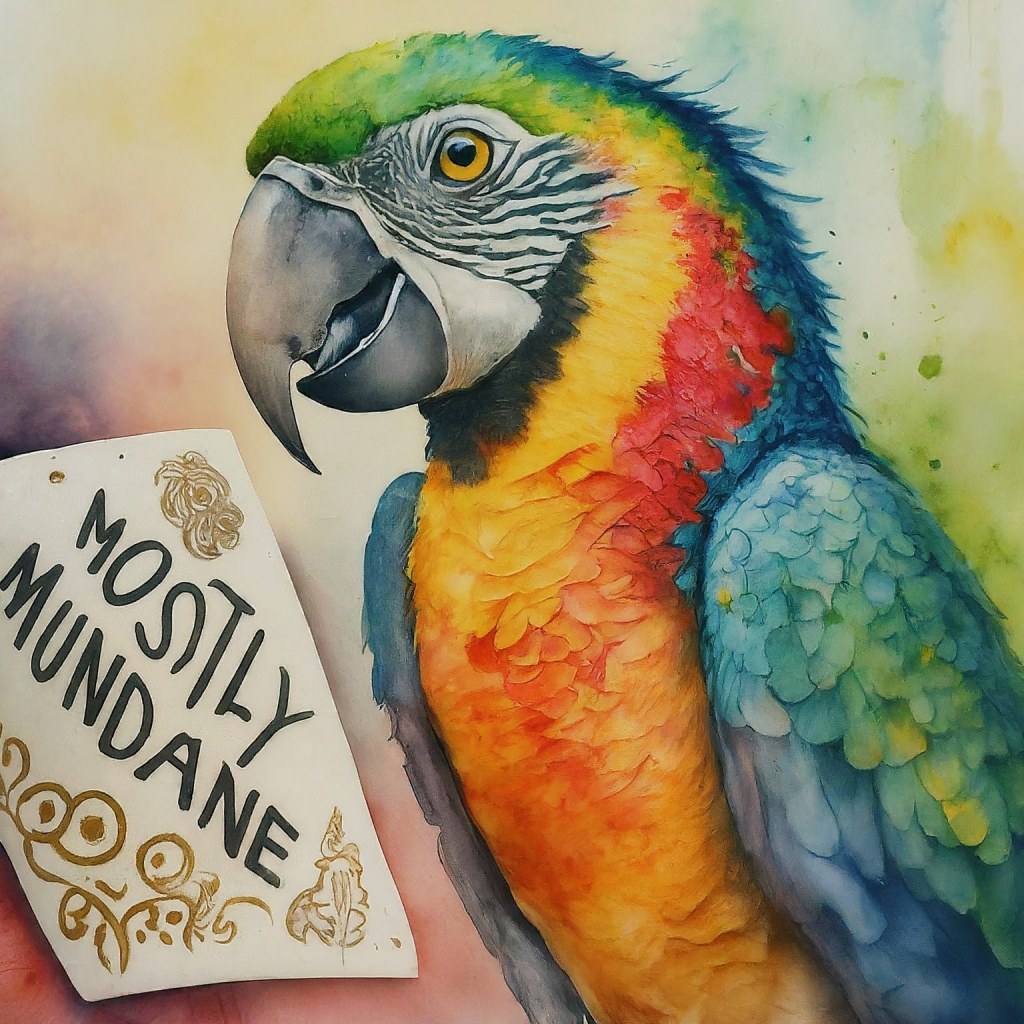
(Note: Dinnaguri, like Malgudi can’t be find on the map. That doesn’t mean the rest of the story is imaginary. In ‘Mostly Mundane’, you shall find Shanti and Anjali, years later, in the maximum city of Mumbai. Their journey from Dinnaguri to Mumbai is yet to be chronicled.)
 Saugata Chakraborty
Leave a comment