• “Tatha always complains that my cases revolve around individuals of overseas origins. It’s high time I break the myth,” Sutanu said, taking a sip of black coffee from his black mug. Our meets had become an early casualty of the series of lockdowns. After shifting the goalpost twice, we were facing each other the first time over Zoom, agreeing to discuss everything except COVID. There was another difference, though. Two more of our M. Com. batch mates had connected for the session- Promit Ray, the seasoned bureaucrat in the West Bengal Government and Aliya, one of the few entrepreneurs our batch has produced.

    “Go ahead, I have only written what I have seen,” I kept the disclaimer short lest it changed the course of the chat. Promit and Aliya too joined in, asking Sutanu to proceed.

    “Well, all of you might remember the news from 2016. The death of Wahid Mahajan in a crossfire at Jhargram.”

    “Yes, I thought there were many a question left unanswered there,” Aliya sounded skeptical.

    “True, I mean the way the media had made it look, anybody would have questioned the validity of the claims made by police, but a later investigation could not prove any foul play, so I will leave it at that. Today, I am only going to tell you how and why we apprehended Wahid,” Sutanu continued in his characteristic calm.

    “Inspector Arnab Joardar had undergone induction with me. In the spate of transfers between the Kolkata and the West Bengal Police in 2014, he found himself transported to West Midnapore while I somehow survived to continue at the Homicide Squad. When I got the call from Arnab that evening, he was in a dilemma. 

    He had returned late the previous night from a week-long vacation with his family in Kolkata. After a quick nap, as he was getting ready to resume duty, the call came from one of the ASIs of his station. The police had recovered the body of an unknown 25-year-old lady from a high drain behind the house of Sekh Lallan of Kuila village early morning. Since Arnab had arrived late, the Circle Inspector had asked others not to bother him till nine and had himself left for Kuila. By the time Arnab could join him at ten, they had already dispatched the body to Jhargram for postmortem. A boy, while defecating in the open field beside the Sekh residence, had seen the couple dumping the body into the drain, but kept mum. By the time there was enough sunlight for everybody in the neighbourhood to notice the dead woman, Lallan was gone from the village. The police believed that someone had strangled the victim with a gamchha that was left attached to her neck.

    Police took Shefali, Lallan’s wife and alleged accomplice in the murder, along with seven others, into custody. CI Mr. Bhanja had, before leaving for the Headquarters, asked Arnab to lodge a case against Lallan and Shefali. But, as Arnab continued with the oral enquiry with the other villagers, an important information had emerged. 

    It was the truth that Lallan had several pending cases of kidnapping, extortion, and sexual abuse against him. But Rustam Hussain was no different. A long-standing adversary of the Sekhs who would stop at nothing to score a point against Lallan, Rustam was also on the run.

    “Is that why your friend, this Inspector Joardar, was in a dilemma?” Promit asked as Sutanu had stopped for another sip.

    “That had made Arnab curious, but he was still not suspecting Rustam. He was more concerned with the bigger picture- the reason that he got me involved in the case.”

    “The bigger picture?” I lacked in restraining my curiosity.

    “Yes, Arnab remembered that in the six months before the Kuila incident, individuals had discovered three other bodies dumped at different locations in the district.”

     “A serial killer?” it was Aliya’s turn to pop the question.

    “And Sutanu will tell you why the killer is not to be one. Let’s hear it out,” I told from my experience involving a murderous jockey and his cousin that Sutanu had solved in his last few days with the Homicide Squad.

    “Arnab had suspected that. Presence of a serial killer in the district is not unheard of, but the Police there, especially at the ground level, had little or no acumen for dealing with such a criminal mind. If Arnab was right, our support could have become critical. He had another reason to believe that Lallan was not the perpetrator. He was way too smart to dump the body at his own backyard if he had committed the murder.

    I told Arnab to talk to the SP to buy some time before lodging the case against the Sekh couple. I knew the young IPS Anand Trivedi, a protégé of our Commissioner, who had till the last month been SP, CID. The familiarity gave me confidence that he would understand what Arnab had to say. Half an hour later, Arnab again called to tell that he had got time till that night to come up with any other lead. There was another development. An inexpensive mobile device, which was found lying beside the body, had become drenched and malfunctioned. After hours of trying, the Binpur Police had activated the phone. The call history had one number marked as “Abbu”. Arnab had called the number from the girls’ mobile. The respondent had identified himself as the father of Fatiha Alam, the girl to whom the mobile belonged. He said he was a resident of Bankura while Fatiha worked in Kolkata at a tailoring unit. Arnab told the man Ghazi that the girl had met with an accident and was getting treated at Binpur Health Centre. Ghazi had said he would start for Binpur. Arnab was expecting him to reach before the light dies for the day.

    ‘That’s at least four hours from now. Do you have the coordinates of the tailoring unit that Fatiha works for?’ I asked him. You can call it superstition, but until Ghazi identified the body as that of his daughter, I couldn’t mention her in the past tense.” Sutanu said.

    “Was the body not Fatiha’s?” Aliya’s mind raced with anticipation as she sought answers.

    “Please hold your horses. Arnab did not have the location for her workplace, but Ghazi had given him a Kolkata landline number of the business. He could have called them, but wanted to know if I could chip in with a visit to the workshop.”

    “And you agreed?” Promit asked.

    “Yes, I had little on my desk, and Arnab had only a few hours left before his deadline. I had to act fast. The directory search for the landline number had led us to the Kasba address of Istanbul Garments. It turned out to be a single-storied house with a signboard outside displaying the name of the organization in white calligraphic lettering against a bright red background. A small verandah led to the small but swanky reception. Both me and Rajesh, an ASI were in plain clothes, but the way the girl at the reception stood up and greeted us had made it clear she could see the patrol vehicle we had descended from on the CCTV monitor. It helped in cutting down on formalities. 

    “That’s Fatiha, b-but is she dead?” Saima, the receptionist, asked in disbelief when she was shown the image of the corpse received on WhatsApp from Arnab. 

    “Yes. Were you friend with her?”

    “Both of us have been working here for the past couple of years, though she was in production. But she did not appear to be sick or anything. How did it happen?”

    “Will tell you everything you need to know, but before that, I would like to have some more information. When did Fatiha last attend the workshop?”

    “The day before; we were closed yesterday. She had asked for a day’s leave today; said she was to go visit her father in Bankura.”

     “So, you did not enquire when she had not turned up for work this morning.”

     “That’s right, Sir.”

     “Had you noticed anything amiss about her in the recent past?”

     “Not really, but Friday afternoon, after Sameer had left, she seemed a little unmindful.”

     “Who is this Sameer?”

     “Oh, he is a nice guy. Fatiha called him a brother. Of late, he used to pay her a visit here often.”

     “By any chance, do you have a contact number of this Sameer?”

     “No, I never asked.”

     “How does he look?” Rajesh had asked, breaking his silence for the first time. 

    “I think we need not ask for a description; don’t you have the CCTV recordings from last Friday, Saima?” I quipped.

    It was Rajesh again who spoke first while we were going through the footage. 

    “That’s Wahid!” He exclaimed.

    “No, that is Sameer,” Saima said, oblivious to the notices that all Police Stations in our state adorned a few years ago featuring the mugshot of Wahid Mahajan. Rajesh and I exchanged glances. We were thinking about the same line. Arnab appeared to be right in not registering a case against Lallan and his wife. Even with the staggering number of alleged hits to his name, Wahid was no serial killer. He killed for only one reason-money.

    As we boarded our Gypsy with the memory chip containing the CCTV recording secured in an envelope, Rajesh made the call to Tiljala PS. Haranidhi Pal, the station-in-charge confirmed Wahid had not missed on his daily attendance to be recorded at the PS as a part of his parole arrangements in the past fortnight. More importantly, he had not turned up yet at the station on that day. I asked Pal to take Wahid into custody if he made the visit, and our driver to take us to Tiljala.

    On our way, I had texted Arnab to bring him up to speed. He called back to report that they had found a lady’s purse with a small diary inside on the asbestos roof of the washroom outside the Sekh residence. Apparently, someone had made the only record in the diary the previous day. “Lallan Sekh has brought me here. I fear for my life.” The handwriting and spelling were too rudimentary for a graduate that Fatiha was. Arnab thought it was a piece of further evidence that someone was trying to frame Lallan. 

    “‘Drop the name of Sameer to both Shefali and Rustam’s family. Tell them we believe Sameer is the killer, and if they tell the truth, they might walk free soon,’ was my advice for Arnab. It worked. Rumel, Rustam’s unemployed son and Sharmeen, his much older wife admitted that Sameer and Fatiha had spent most of the previous day at their house, had dinner with them. At four in the morning, Sameer had left saying he was to take Fatiha to her fiancé in Jamshedpur. It was an hour later that Shefali recalled discovering the body inside their washroom. She woke Lallan up, and it was a hurried decision for the couple to get rid of Fatiha’s body, not that Shefali knew either the name of the deceased or Sameer.” 

    “But how was Wahid or Fatiha related to Rumel?” Aliya wondered.

    “Good question and Arnab too had asked the same. Rumel said his cousin Sagir had requested Sharmeen, the lady of the house, to accommodate the “siblings” for a day. It did not appear that Rumel was lying, and Sagir was not one among the arrested. Sagir Ali was a Kolkata resident. Again no address, but his mobile number was active till the wee hours of the day, somewhere in Rajabazar. I don’t want to bore you with the details but, in the next few hours, Ghazi had identified the corpse to be of his daughter, a case of conspiracy to murder against Rustam and his family and another for an attempt to destroy the evidence against Lallan and Shefali were recorded by Binpur Police, and an unsuspecting Wahid was put into the Tiljala PS lock up. Sagir was yet to be apprehended. Any question?”

    “You mentioned Sameer had told Rumel they were going to meet Fatiha’s fiancé. Does that have anything to do with the case?” I asked, in desperation to find a twist in the tale.

    “There you are my storyteller friend. The fiancé, as we would later find out, was Babul Islam, a Jamshedpur-based entrepreneur. The only problem with the match was Babul already had a wife in Sofia Mahajan, Wahid’s sister. When Sagir had contracted the hitman for a dead body to be planted at Lallan’s residence, Wahid had seen in the assignment an opportunity to translate his effort to save the marriage of his sister into a profitable venture. He knew about the three murders in the district and used the gamchha to wring the life out of Fatiha’s body to make it look like the doing of a suspected serial killer on the prowl. Sagir did not have the stomach for third-degree, and Wahid was prompt to confess once the news of his employer’s arrest reached him.”

    “Tatha might be satisfied with the hurried conclusion, but I still insist on knowing the truth about that crossfire.” Promit sounded like a demanding bureaucrat determined to make the life of his subordinates difficult. 

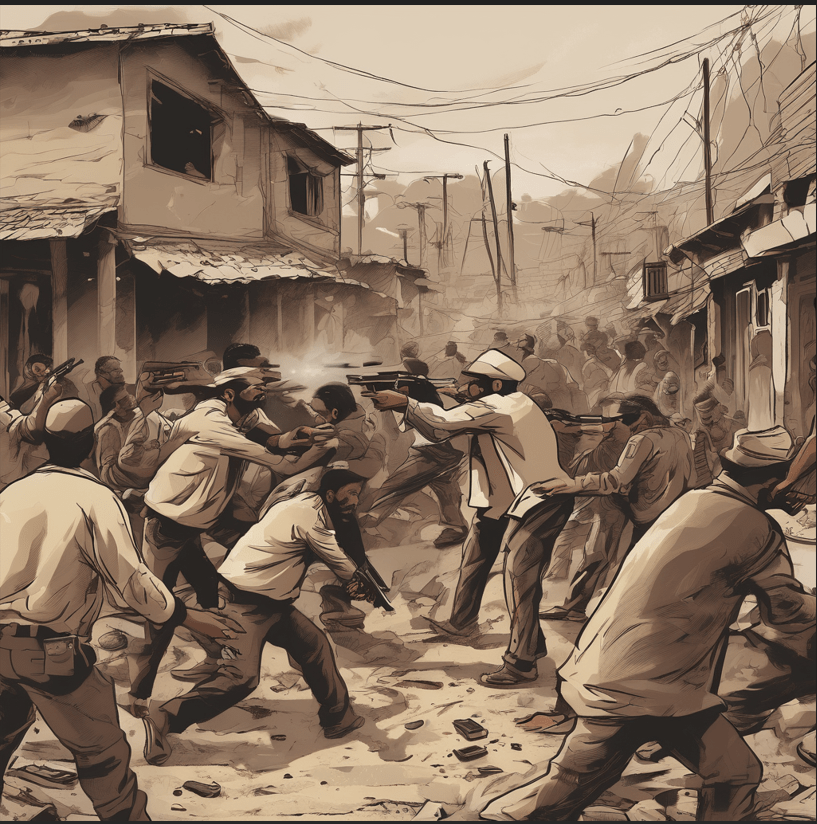
    “Well, the goons who had intercepted the Jhargram Police van carrying Wahid to Kuila for reconstructing the crime scene were not there to rescue him. It later came to light that a Babul Islam of Jamshedpur paid them a lakh to put a bullet inside Wahid’s head. Revenge is far more unpredictable than a staged crossfire, my friends,” Sutanu concluded. 

    (Based on true events in another country)
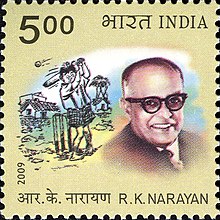
  • Malgudi, bathed in the laziness of a humid afternoon, thrummed with the cicadas’ incessant song. Venkatrao, draped in a threadbare dhoti that clung damply to his limbs, sat with his forehead creased against the rough grain of a wooden bench. In his right hand, he gingerly fingered a crumpled rupee note, its crispness an affront to the sun-bleached monotony of his life.

    The money sat heavy, a lodestone attracting a swarm of justifications. It wasn’t a stolen windfall, no sir. Merely a misplaced offering, a stray feather from the temple goddess draped upon his humble doorstep by a careless crow. A celestial nudge, surely, not a temptation.

    Venkatrao, a man of modest needs and even more modest means, had dreamt of this note’s possibilities. A fragrant cup of filter coffee at Supposedly Coffee House, the clink of its stainless steel tumbler a symphony against the mundane clatter of his existence. Perhaps even a single, plump samosa, its oily heart bursting with spiced potatoes – a forbidden luxury.

    His wife, Saraswati, stirred within him like a reproachful ghee lamp. Her bony fingers, etched with the maps of their shared austerity, would count the wrinkles on the note with disapproval. Her tongue, sharp as a curry leaf, would dissect his flimsy justifications, leaving him stripped bare in the sun-drenched courtyard.

    Yet, the note persisted, whispering of possibilities. Venkatrao could almost smell the coffee, its bitter aroma weaving through the dust. He could taste the crispness of the samosa, feel its greasy warmth slide down his throat. A shiver of longing danced down his spine, a rebellion against the monotonous thrum of the cicadas.

    He reasoned with himself, the arguments tumbling forth like poorly stacked mangoes. It was a loan, he’d convince Saraswati. A temporary indulgence, to be repaid with the next meager pay from the mill. Besides, wasn’t happiness a right, even for a threadbare soul like him?

    As the sun dipped towards the mango trees, casting long shadows across the dusty lanes, Venkatrao’s resolve began to fray. The note crumpled in his fist, a talisman against the gnawing guilt. He rose, his dhoti flapping like a moth’s wings, and took a tentative step towards Supposedly Coffee House.

    But just as he crossed the threshold, a small hand slipped into his. His daughter, Lakshmi, eyes wide and hopeful, looked up at him. “Papa,” she chirped, “Can we buy jalebis today?”

    The question, innocent and pure, shattered the mirage of his justifications. Venkatrao looked at the crumpled note, the samosa and the coffee dissolving into smoke before him. In his daughter’s eyes, he saw not just hunger, but trust, an anchor in the turbulent sea of his desires.

    With a sigh, he crumpled the note further and tucked it back into his pocket. This loan, he knew, would have to wait. Happiness, he realised, wasn’t just a cup of coffee, but the shared sweetness of a jalebi with his little girl. And as they walked towards the jalebi vendor, the cicadas seemed to sing a different tune, one of contentment and simple joys, sweeter than any stolen sip of coffee.

    Thus, Venkatrao returned home, the rupee note a reminder of his victory over temptation, a silent pact with the goddess and his own conscience. The samosa remained a dream, the coffee a distant aroma, but in his daughter’s smile, he tasted a sweetness that lingered long after the jalebis had vanished. And the cicadas, finally, seemed to sing in perfect harmony with the quiet contentment of his heart.

    (The third in my series of pastiche is dedicated to none other than R.K. Narayan)

  • It all began, as these pickles invariably do, with a spot of bother with Aunt Agatha. You see, the annual Ganymede Club bake-off loomed upon the horizon, casting a shadow of trepidation upon the normally sun-dappled brow of my esteemed chum, Bingo Little. This year, Aunt Agatha, a woman with a pastry pan for a heart and a rolling pin for a soul, had devised a particularly fiendish pie. A Moroccan Apricot Surprise, she called it, positively brimming with saffron, cardamom, and enough chili peppers to send a battalion of Cossacks into a tango.

    Now, Bingo, like myself, wouldn’t know a cardamom pod from a cricket bat, but when Aunt Agatha, eyes glinting like a magpie in a chutney jar, declared his entry vital to Ganymede Club glory, he was putty in her flour-dusted hands. And so, I found myself enlisted as his culinary co-pilot, navigating the treacherous shoals of this gastronomical Everest.

    The baking commenced in a flurry of whisking and rolling, with Agatha barking orders like a Sergeant-Major on a sugar high. Eventually, the pie emerged from the oven, a golden behemoth wreathed in a fragrant cloud that made my eyebrows do the Charleston. “Voila!” declared Agatha, puffing out her chest like a pouter pigeon. “One bite of this, darling Bingo, and the Ganymede trophy is as good as ours!”

    Bingo, bless his cotton socks, was never one to disappoint an expectant relative, especially one armed with a rolling pin. He sliced the pie with the reverence of a surgeon dissecting a priceless truffle, and popped a generous wedge into his eager gob.

    For a moment, he chewed in contemplative silence. Then, his eyes bulged like poached gooseberries. A strangled gurgle escaped his lips, followed by a cough that would have cleared a fogbank off the Thames. His face contorted, turning the colour of a prize beetroot, and sweat beaded on his brow like diamonds on a duchess’s décolletage.

    “Agatha, my good woman!” I cried, leaping up as he clutched his throat with the air of a man being strangled by a boa constrictor with a particularly spicy temper. “What, in the name of all that is holy, have you put in this monstrosity?”

    “Why, just a dash of my secret chili paste, darling,” chirped Agatha, oblivious to the inferno raging within Bingo. “Gives it a bit of a kick, you know.”

    Kick? This thing wasn’t kicking, it was doing the Highland Fling in a volcano! Bingo, meanwhile, was gurgling like a drain, his eyes watering like a tap left on in a monsoon. I rushed to his side, visions of St John’s Ambulance sirens flitting through my mind.

    “Don’t panic, old bean!” I cried, desperately fanning him with a tea towel. “There must be something we can do!”

    Just then, inspiration struck me like a custard pie to the kisser. “Milk, Bingo! Milk! Drown the fire!”

    With the grace of a hippopotamus on roller skates, I dashed to the fridge and poured a gallon of the white stuff down Bingo’s protesting throat. It was like throwing petrol on a bonfire, but in reverse, I hoped. Miraculously, it worked. The flames in Bingo’s eyes subsided, replaced by a watery gleam of relief.

    “By Jove, Bertie,” he gasped, wiping his brow with a trembling hand. “You saved me from a fate worse than Aunt Mildred’s fruitcake!”

    The Moroccan Apricot Surprise, alas, never saw the light of the Ganymede bake-off. But that night, over a soothing cup of chamomile tea, Bingo and I vowed never to trust Agatha’s “secret ingredients” again. And as for me, I’ll stick to my tried-and-true jam sandwiches – at least I know what’s in those. After all, one can never be too careful when it comes to the culinary creations of our dear aunts. You never know what fiery surprises might be lurking beneath that golden crust.

    (The above piece is the second pastiche I have ever tried, imitating the inimitable P. G. Wodehouse.)

  • PC: Disha Doshi

    “It is said Hell has three gates Lust, greed and anger. But Lie plays an important role in getting close to the hell…

    A very very interesting and engaging story. It’s witty and full of practical knowledge which should be learnt to live in this deceptive world. The book is in easy language and the way it’s written I am quite impressed it’s suspense with a tinge of wittiness. I really enjoyed this one. This should be read by everyone to know the reality of this fake world.”- Mannat Chaudhary.

    “Well, to me, this very book served well enough with its purpose to bring me back my lost hope. After failing in different phases of life one after another, I’ve been mostly dedicated towards work and nothing else where as the likings to have a group of friends to hang out with, and to have someone to count over, was a thing I stopped believing in. Through the heart’s binoculars, author has seen a completely different world of pain, grief, emotions and shades of happiness which comes when one decides to take a new step ahead. Books like such simply turn into a specialised form of read with its own way of making space in the mind of reader. Being a Con artist, the protagonist who faced more than just devastation around in life, the character description and role-play of this lead character in the book required way too much of attention which the author succeeded with, to a height great enough. The simple combination of pain and sadness in the book is mixed up to blend in with a beautiful way which I really enjoyed throughout the book.” – Dhatri

    Ms Chaudhary got the Biblical reference implied in the title right and is probably justified calling the world a deceptive one, necessitating the understanding the underlying of any attractive proposition in order to steer clear of frauds.

    With the count of Amazon reviews touching 63 while curating this story (on January 22, 2022 barely two months since the release), I could have gone on bragging about the 97% positive reviews the book has received, but this one by Dhatri (name as appearing in the reviews) meant a lot to me as the reviewer has clearly identified with at least one of the characters in the story. She further could appreciate a completely different aspect of this apparent con story in the emotional attachment and support one finds from unexpected sources that appear at the most difficult of times. With these reviews and several others which you can find on Amazon, I feel vindicated in my attempt to explore human emotions while narrating a story that essentially offers enough distractions of a more thrilling nature. The current average rating of the book is 4.4/5 (4.39 in Goodreads) if that helps you decide to place an order.

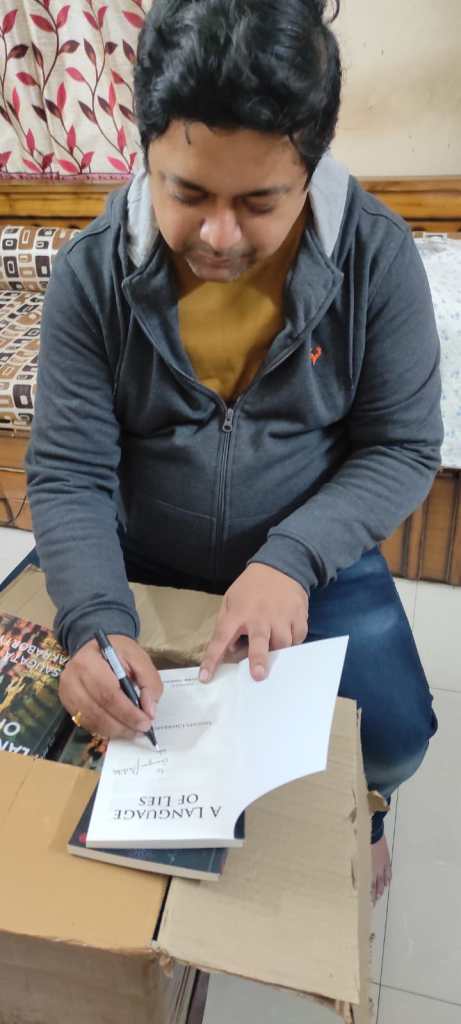
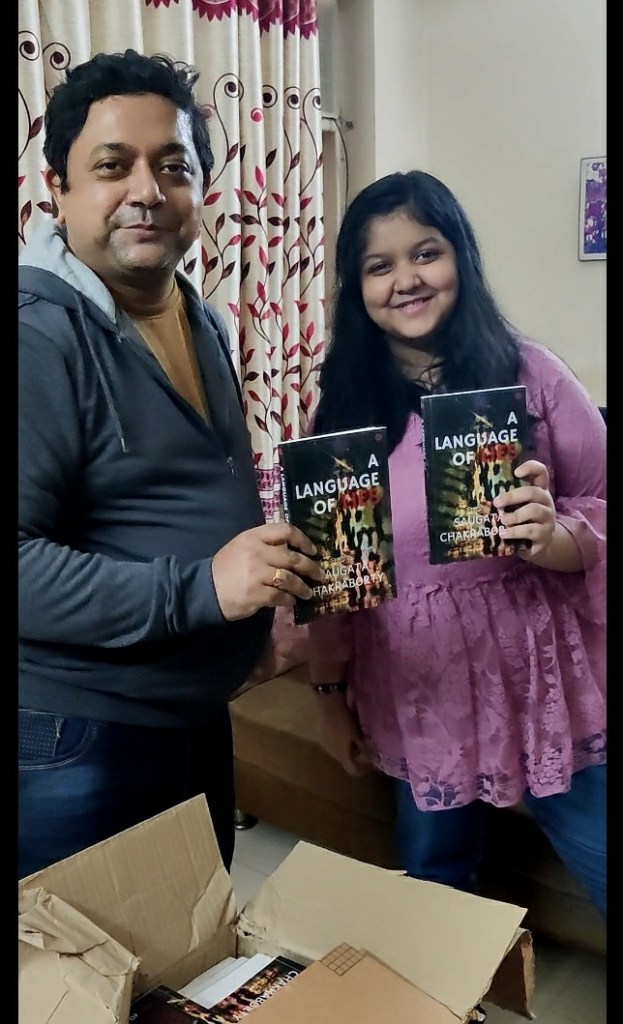
  • Gungun with the first print copy
    The box full of lies?
    Gungun insisted on getting the copy signed.
    I also get to pose.

    PC: Sharmi

    I had started working on the project in September, 2019, soon after the news of the apprehension of one Anthony Gignac (Sean Brignac in the book) by the FBI came in. After the success of ‘They Go to Sleep’ on online platforms that could not be replicated at physical bookstores due to lack of distribution channels, I was determined to go with a traditional publisher this time around. It implied a longer waiting period for the publication, and so I had my sight on 2022 as the tentative deadline. On the western front, Mr. Gignac, as always, turned out to be a tough nut when the case went to the Courts and the final judgment came as late as in March this year. One thing I was certain of by then. The book had become a saga of human emotions rather than being a con story I aspired to write.

    Then the pandemic had delivered its mighty blow. After battling it out for a fortnight, Dad started showing symptoms of giving up. The end came on May 8. For a couple of months, time stood still. I had to break out of the self-imposed circle of despair. With the epilogue written, it was time to have a look at the shortlist of publishers that I was to approach. Mr Guntur Srinivas Sharma, Head-Publications, Invincible Publishers was the fastest to evince interest. The feedback on the synopsis and sample chapters came within a week from their editors. They were good to take me on board, I was told. Three rounds of editing followed the August signing of agreement. During the Puja holidays spent in the south, the cover ideas were getting sent and back. From ‘The Sheikh who Never Was’, through the more on the face ‘The Prince of Fraud’, emerged the final title in ‘A Language of Lies’. The marketing team by then had started asking for the date to commence pre-orders. Could that be scheduled for November 1, what would have been the 78th birthday of Dad, I asked. The affirmation was positive.

    The deluge of photos of the book-mails received from friends, and colleagues gave rise to another issue at home. Gungun was perturbed that she did not get her hands on the first copy ever. Yesterday when the box was opened, despite that drawback , she however had agreed to the photo op. Now I can freely wish to see loads of those photos and videos.

    Enjoy reading ‘A Language of Lies’ and please upload your reviews. Will tell in the reason behind this request in the upcoming blog.

  • “অন্ধজনে দেহ আলো”
    কলকাতার বাতাসে নানান রোগজীবাণু ভেসে বেড়ায়, এতে নতুন কিছু নেই। শীতের টান পড়েছে চামড়ায়, ফাটাফুটি দিয়ে তেমনই কোনো জীবাণুবাবাজি ঢুকে পড়েছিল ডান আঁখিপল্লবে।রকি বালবোয়ার ম্যাচের পরের মতো চোখ নিয়ে গৃহবন্দী থাকতে হয়েছিলো সপ্তাহখানেক। বড় ডাক্তারবাবুকে দেখাবো বলে একদিন গেছি বাড়ির কাছেই ড. নীহার মুন্সী আই ফাউন্ডেশনে। ওয়েটিং হলে আমার পাশে এসে বসলেন এক বছর পঁয়ত্রিশের ভদ্রসন্তান। তখন খেয়াল করিনি, ডানদিকে  “অপাঙ্গে দেখা”র প্রশ্নই নেই, কিন্তু কথোপকথন শুনে বুঝলাম আমাদের পেছনের সারিতেই ওনার বাবা এবং স্ত্রী বসেছেন। বৃদ্ধের ছানির অস্ত্রোপচার হয়েছে দিনকয়েক আগে, ফলো আপের জন্য বৌমা গাড়ি চালিয়ে নিয়ে এসেছেন ক্লিনিকে।
    “এখানে আসার অন্য কোনও রাস্তা নেই, বাবা? এই বস্তির রাস্তাটা যা ডেঞ্জারাস।”আমার পাশের ভদ্রলোকটিকেও শুনলাম সায় দিচ্ছেন। বৃদ্ধ বললেন,”আছে, তিন-চার ভাবে আসা যায়, কিন্তু অনেক গলিটলি, আমি তো দেখতে পারছি না, বলে দিতে পারতাম না।”

    “আরে অপারেশনের দিনেও দেখলাম, আজকেও এক মহিলা হঠাৎ করে গাড়ির সামনে এসে পড়লো। এদের কোনো সেন্স নেই! আমি সাবধানেই চালাচ্ছিলাম, জোরে ব্রেক দিতে হলো শুধুমুধু”।

    “সব তো খোট্টা! জবরদখল করে বসেছে এখানে রাস্তার ধারে, দেখনি? যেখানে যাবে মেস্ করে রেখে দেবে। এদের আবার সেন্স! কিন্তু গাড়ি যদি কোনো কারণে একটু টাচও হয়ে যায়, তাহলে তোমাকে কিন্তু শেষ করে দেবে! তাই আমাদেরকেই সাবধানে চলাতে হয়”, আমার পাশের জন যোগ করেন।

    “সত্যি! ভোটের জন্য রেখে দিয়েছে এই বস্তিগুলো। ন্যুইস্যান্স ভ্যালু সব।” ভদ্রমহিলার দেখলাম তখনো রাগ কমেনি।

    “তোমরা যেটাকে বস্তি বলছো, ওগুলো ম্যুনিসিপ্যালটির কোয়ার্টার্স আসলে।” এবারে বৃদ্ধের গলা শুনতে পাই।

    “ঐ একতলা ঝুপড়ির মতো বাড়িগুলো কোয়ার্টার্স?”

    “হ্যাঁ। ম্যুনিসিপ্যালটির সুইপারদের। ঐ যে সকালে বাঁশি বাজিয়ে আসে না আবর্জনা নিতে? তারপর রাস্তা ঝাঁট দেওয়া, বাথরুম পরিষ্কার-টরিষ্কার সব ওরাই করে। বাঙালিরা তো আর করবে না এসব কাজ।”তরুণ দম্পতিটিকে চুপ করে যেতে দেখলাম। 
    Refraction test -এর জন্য ততক্ষণে আমার ডাক এসেছে, ওদের ছেড়ে উঠে গেলাম ভেতরের ছোটো ওয়েটিং হলে।  ভেতরের সমস্ত চেয়ার ভর্তি। অগত্যা স্বাস্থ্য বীমা সহায়কের কেবিনের দেয়ালে পিঠ ঠেকিয়ে দাঁড়ালাম। এই ভদ্রমহিলা, দীপাদিকে আগেও দেখেছি অসীম ধৈর্য্য নিয়ে বয়স্ক মানুষগুলোর সঙ্গে কথা বলতে, বীমা কোম্পানির ক্লেইম ফর্ম ভরে দিতে। আজ বছর পঁয়ষট্টির এক মহিলা বসে ওনার সামনে। ছানির অপারেশন হবে। পরের সপ্তাহে তারিখ দেওয়া হয়েছে।
    দীপাদি বার দুয়েক ফাইল উল্টেপাল্টে দেখে মুখ কাঁচুমাচু করে বললেন, “বি এস এন এলের হেল্থ প্ল্যানটা তো বন্ধ করে দিয়েছে। আপনাকে কিন্তু ক্যাশে পেমেন্ট করতে হবে।”

    “জানি ভাই। যারা এখনো চাকরিতে আছে, তাঁরাই বেতন পাচ্ছেনা, আমাদের চিকিৎসার টাকা আর কোত্থেকে দেবে বলো?”


    ঠিক সে সময়েই অপ্টোমেট্রিস্ট এক ভদ্রলোক কেবিন থেকে বেরোতে গিয়েই আমার মুখোমুখি।

    “ওহ্ আপনার swellingটা এখনো কমেনি দেখছি! একটু দাঁড়ান। আসছি।”
    শুনেছি দৃষ্টির জোর কমে গেলে নাকি অন্যান্য ইন্দ্রিয় বেশি সজাগ হয়ে ওঠে। দীপাদি শুনলাম বলছেন, “আপনার টোটাল খরচা হবে ১৬৫৮১ টাকা। অপারেশনের দিন সকালে পুরোটা নিয়ে আসবেন।”

  • When a headless and limbless human torso is recovered from the backyard of a South Kolkata house, Police Detective Sutanu Deb meticulously gathers shreds of evidence revealing the inglorious past of the victim and the perpetrators. ‘Teen Patti’ is a story about lust, greed, pride, and unrequited love. 

    A colonial bungalow at the heart of Bangalore had earned the reputation of a haunted house. An enthusiastic group of Ghostbusters ventures into the house at midnight and puts the rumours to rest. ‘The Tune’ is a chronicle of the misadventure that unsettled the dust on a long-buried past with consequences no one had bargained for.

    Like his first collection of short stories ‘They Go to Sleep,’ Saugata ends this book with a romantic short ‘An Affair to Forget.’ Only this time the central characters are teenagers and the setup a little less amusing. 

    A winning deal of three cards from Saugata’s pack of stories, ‘Teen Patti: The Three-card Brag’ will certainly keep you hooked till the very end.
  • It is not me, but Alexa that tells Bookgeeks.in to be India’s No. 1 ranked Book Review Websites. Looking at their reviews, it gave me jitters on the thought of putting ‘They Go to Sleep’ through the Acid Test. Today, on April 10 night, the report card is ready. Here is the link to their full review.

    https://www.bookgeeks.in/they-go-to-sleep-saugata-chakraborty-book-review/

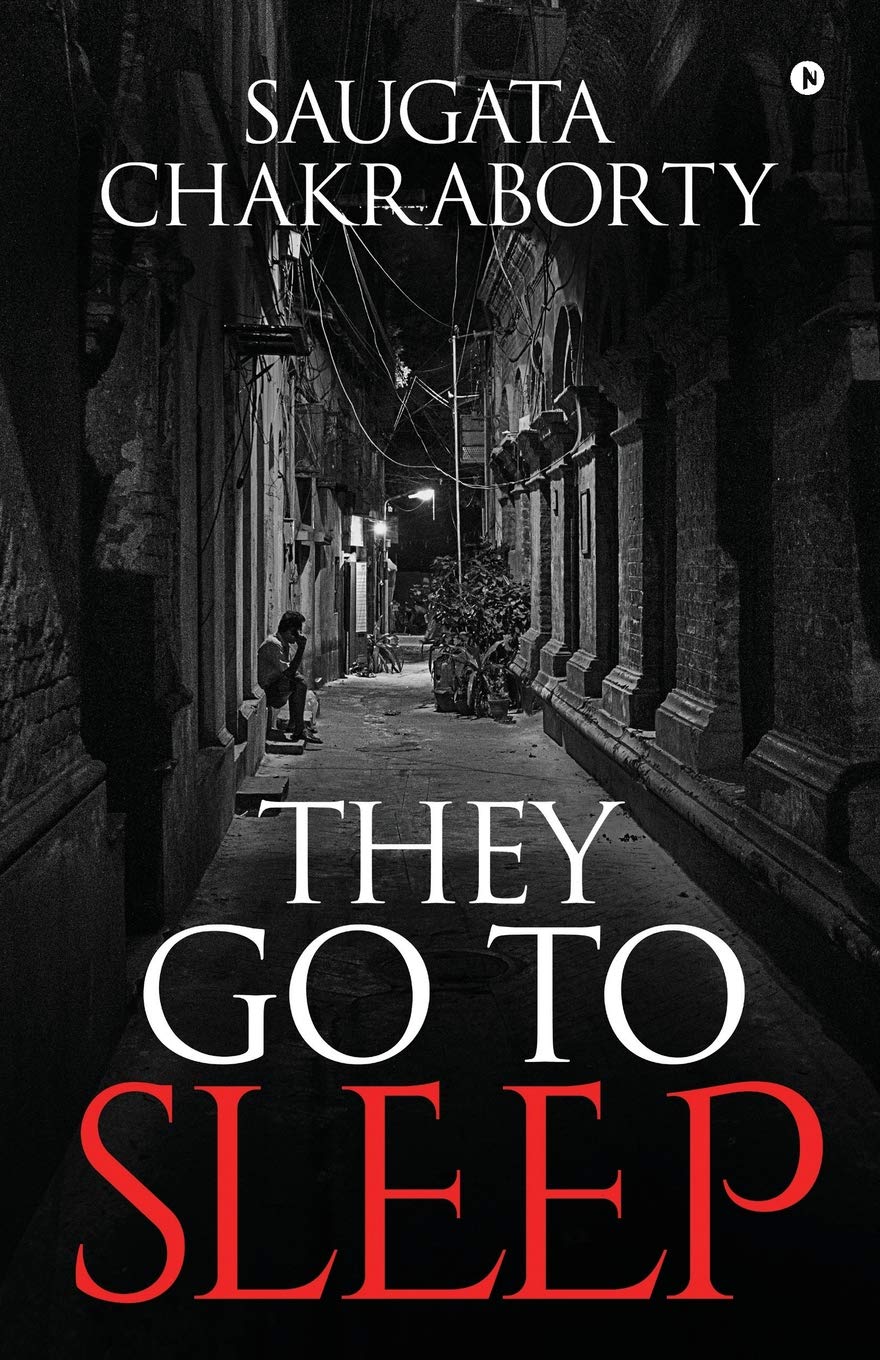
    The much admired cover. Picture Courtesy: Aparesh Sarkar
  • ১.

    পূর্বপুরুষের ভিটেয় শুনেছি জোড়া বন্দুকের পুজো হতো;
    আবার একই উঠোনে বসে পথশ্রান্ত আব্বাসউদ্দীন
    ভাওয়াইয়া ধরতেন।
    জলের দেশ ছিল সে এক,
    জমিদারদের লেঠেলবাহিনীর সঙ্গে
    বেপরোয়া মাঝিমাল্লাও ছিল-
    রাতে ব্যবসায়ীদের নৌকো এড়িয়ে চলতো
    বজ্রযোগিনীর ঘাট।
    তাই রক্তের কথা উঠলে
    এখনো একটা ভয় কাজ করে
    পুঁথি লেখা হাত নিশপিশ করতে থাকে
    দেরাজে তুলে রাখা গুপ্তিটা ধরার জন্যে।